
PCB Fault Detection & Problem Diagnosis Services — Research-Oriented Analysis
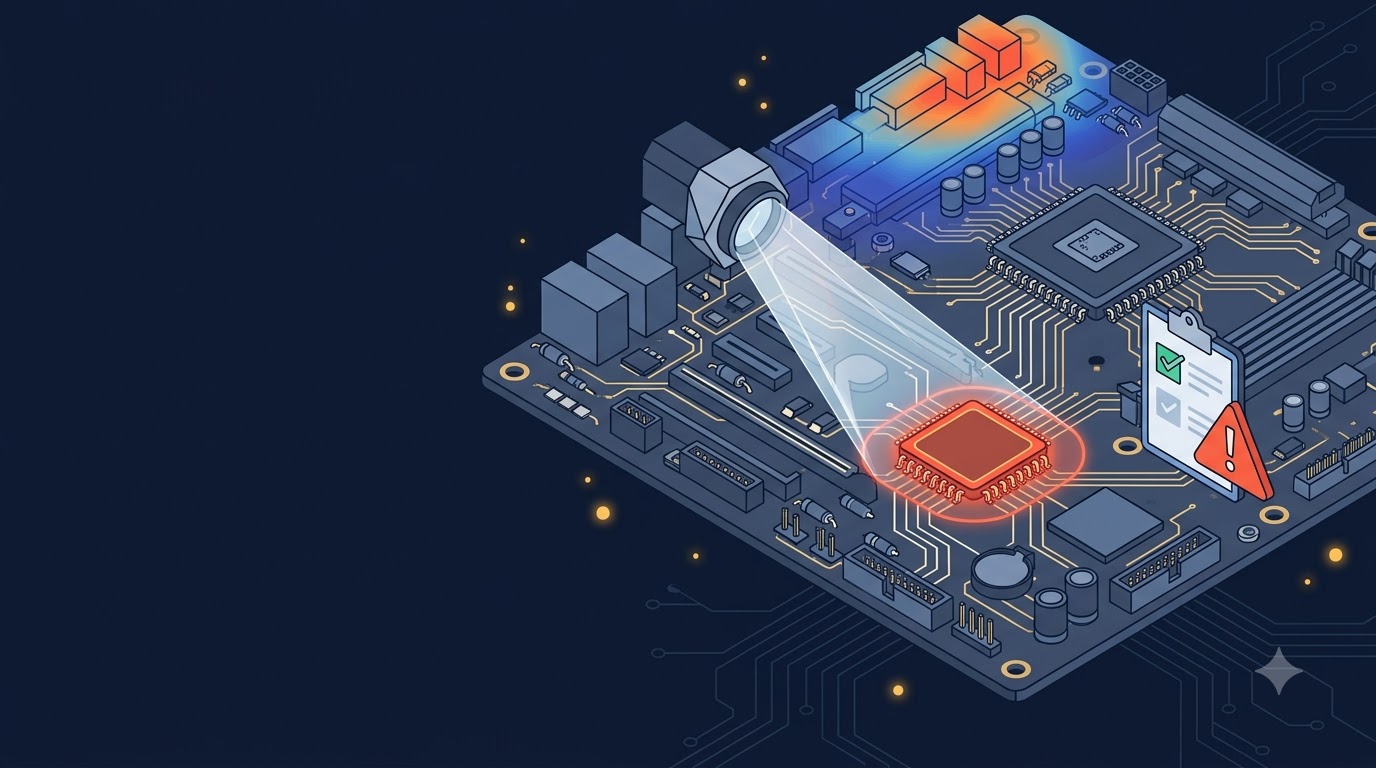
"It's not working" is where most PCB troubleshooting starts, and where a lot of it gets stuck — swapping components one at a time, hoping to stumble onto the fault, without ever identifying the actual root cause. A board (or product) that fails intermittently, underperforms, or stops working after a period of use usually has a specific, findable cause — but finding it requires a systematic diagnostic process, not trial and error. We provide PCB and electronic product fault detection services built on a research-grade diagnostic methodology, with proper documentation at every stage.
What Makes This "Research-Oriented"
Most repair-shop-style troubleshooting stops at "found it, fixed it" with no record of what the actual fault was or why it occurred. Our approach documents the diagnostic process itself — the symptoms, the tests performed, the evidence pointing to a specific fault, and the root cause identified — producing a report useful not just for fixing the immediate problem, but for understanding why it happened and preventing recurrence. This is especially valuable for:
- Academic and research projects — where a hardware fault in a thesis or research prototype needs to be documented as part of the research process itself, not just silently fixed
- Product development teams — where understanding a failure's root cause prevents the same fault appearing in a production batch
- Anyone needing a defensible diagnostic record — for warranty claims, vendor disputes, or repeated field failures
Our Diagnostic Process
Visual & Mechanical Inspection
Checking for visible signs of failure first — burnt components, cracked solder joints, corrosion, physical damage, or signs of thermal stress. A significant share of faults are identifiable at this stage before any electrical testing begins.
Continuity & Electrical Testing
Systematic continuity checks, voltage and current measurement at key test points, and comparison against expected values from the schematic — isolating the fault to a specific section of the circuit rather than guessing at the whole board.
Signal Integrity Analysis
For boards with digital or high-speed signals, checking for signal degradation, timing issues, or noise that might not show up as an obvious component failure but causes intermittent or performance-related faults.
Thermal Imaging
Identifying components running hotter than expected — often an early indicator of a failing component or a design-level issue (inadequate heat dissipation, incorrect current path) before it causes an outright failure.
X-Ray Inspection (Multilayer & BGA)
For multilayer boards or BGA (Ball Grid Array) components where the fault isn't visible or accessible from the surface, X-ray inspection reveals internal solder joint quality and hidden layer issues that other methods can't detect.
Root-Cause Analysis & Documentation
Once the specific fault is isolated, identifying why it occurred — a design issue, a manufacturing defect, a component failure, or an environmental/usage factor — and documenting the full diagnostic trail in a clear report.
What We Diagnose
- Intermittent faults — the hardest category to diagnose, since the problem isn't present during every test; systematic testing under varied conditions (temperature, vibration, power cycling) is often needed to reproduce and isolate these
- Complete failures — boards or products that have stopped working entirely, where the goal is finding the specific failed component or connection
- Performance degradation — products working but underperforming specifications, often traced to component drift, thermal issues, or a design margin problem
- Recurring field failures — the same fault appearing across multiple units, which usually points to a design or manufacturing process issue rather than a one-off component failure
Who This Is For
- M.Tech and PhD scholars whose research hardware or prototype has developed a fault that needs proper diagnosis and documentation as part of the research record
- Product developers and hardware startups needing root-cause analysis on a failing prototype or a recurring field issue
- Businesses relying on custom electronics (like the dual-tone IC circuits we've built for signaling systems) that need diagnostic support when a deployed unit develops a fault
- Anyone who has already tried basic troubleshooting without success and needs a more systematic diagnostic approach
Get Started
If you have a board or product with a fault that hasn't been resolved through basic troubleshooting, tell us what's happening — the symptoms, when it occurs, and what's already been tried — and we'll scope the right diagnostic approach.
Talk to us on WhatsApp or explore more at researchzones.com to discuss your diagnostic needs.
Chat with our team directly on WhatsApp for a quick quote or free guidance.
Frequently Asked Questions
What's the difference between basic troubleshooting and your diagnostic service?
Basic troubleshooting often stops at finding and fixing the immediate symptom. Our process documents the full diagnostic trail — tests performed, evidence gathered, and root cause identified — producing a record useful for understanding why the fault occurred, not just that it was fixed.
Can you diagnose intermittent faults that don't show up consistently?
Yes — intermittent faults typically require testing under varied conditions (temperature cycling, vibration, power cycling) to reproduce the issue reliably enough to isolate its cause, which is part of our systematic approach.
Do you provide a written diagnostic report?
Yes — documentation of the diagnostic process and root cause is a core part of the service, particularly valuable for research/academic use, warranty disputes, or preventing recurrence in future production.
Can you inspect multilayer boards or BGA components where the fault isn't visible?
Yes — X-ray inspection is used specifically for multilayer boards and BGA components where internal solder joints or hidden layer issues aren't accessible through surface-level inspection.
Is this service only for PCBs, or other electronic products too?
Both — the diagnostic methodology applies to PCBs specifically as well as broader electronic products and assemblies with a hardware fault.
Do you also fix the fault, or only diagnose it?
Diagnosis and root-cause identification is the core service; repair and correction can be scoped separately depending on what the diagnosis reveals and what you need afterward.
Related Articles
0 Comments
Be the first to comment.