
How Multi-Property Hotel Owners Can Monitor Room Access Remotely
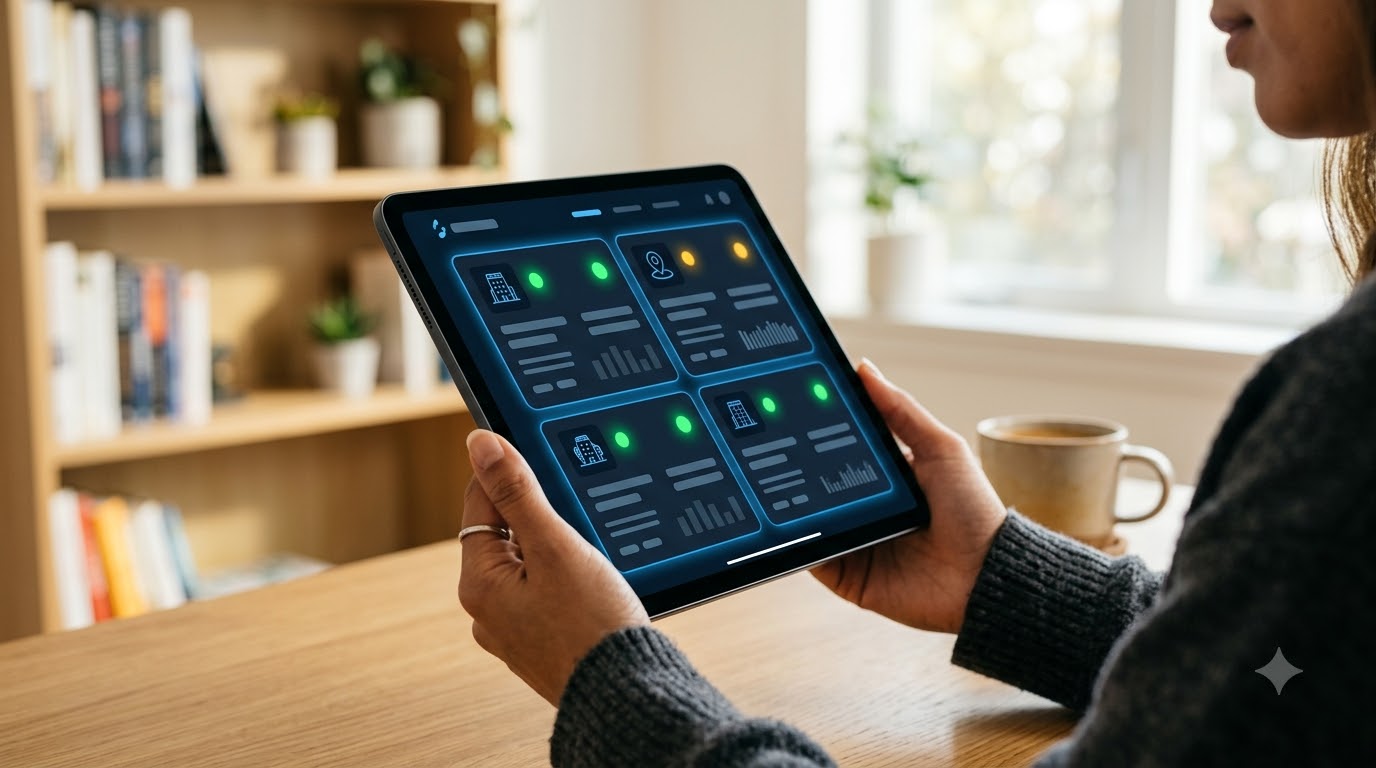
Owning one hotel means you can, in theory, personally notice when something feels off. Owning three or five properties across different locations makes that kind of informal oversight structurally impossible — you simply can't be everywhere, and staff at each property know it. This is exactly the gap that front-desk fraud exploits, and it scales with every additional property you add unless your monitoring scales with it too.
Why Multi-Property Ownership Increases Fraud Risk Specifically
- Reduced owner presence per property — attention gets divided across locations, and staff at any given property know how infrequently the owner is physically on-site
- Inconsistent oversight standards — without a centralized system, each property manager may run things differently, making it harder to spot when one location's numbers don't add up compared to your other properties
- Delayed awareness — problems at a property you visit monthly can run for weeks before you'd notice through in-person observation alone
What Centralized Remote Monitoring Actually Looks Like
One Dashboard, All Properties
Rather than logging into separate systems (or relying on separate phone calls) for each property, a properly integrated system gives you one dashboard showing booking status, room access, and revenue across every location simultaneously.
Real-Time Alerts, Not Delayed Reports
Notifications when a room is accessed or assigned at any property, as it happens — not a summary you review once a week after the fact, by which point a pattern may have already run for days.
Cross-Property Comparison
Occupancy and revenue patterns are far easier to evaluate side-by-side across properties than in isolation — a property performing noticeably differently from your others, without an obvious explanation (seasonality, local events), is a signal worth investigating specifically.
Consistent Standards, Enforced Structurally
Rather than relying on each property manager to follow the same informal process, a centralized PMS with lock integration enforces the same booking-to-key-issuance rule at every property automatically — removing the inconsistency that comes from relying on different managers' individual diligence.
What This Replaces
Most multi-property owners currently rely on some combination of: trusting individual property managers, periodic in-person visits, and reviewing financial reports after the month closes. Each of these has the same underlying weakness — they depend on either trust or a significant time delay, both of which are exactly what fraud is designed to exploit. Real-time, cross-property visibility removes the delay and reduces the dependence on trust alone.
Implementation Across Multiple Properties
- Each property's PMS and lock system integrated individually, but reporting into one centralized owner dashboard
- Staff training conducted per property, since teams and existing workflows differ across locations
- A phased rollout is usually more practical than switching every property simultaneously — starting with the property of greatest concern or easiest implementation, then expanding
Get Started
If you're managing multiple properties and want consistent, real-time visibility across all of them rather than relying on periodic visits and trust, let's talk about your specific portfolio and current setup at each location.
Talk to us on WhatsApp or explore our full hotel PMS software services and fraud prevention solution.
Chat with our team directly on WhatsApp for a quick quote or free guidance.
Frequently Asked Questions
Do all my properties need to be on the exact same system to get centralized monitoring?
It's significantly easier and more effective with a unified system across properties, though integration approaches can be assessed per property depending on what's already installed at each location.
Is this only useful for large hotel chains, or does it help owners with just 2-3 properties too?
It's relevant at any scale beyond a single property — the core problem (reduced oversight per property as your portfolio grows) starts with a second location, not just at chain scale.
How long does it take to roll this out across multiple properties?
This depends on the number of properties and their existing setups, but a phased rollout (starting with one property, then expanding) is typically more practical than a simultaneous switch everywhere.
Can property managers still operate independently, or does this centralize control away from them entirely?
Day-to-day operations remain with each property's team — centralized monitoring gives the owner visibility and consistent structural rules (like booking-linked key issuance), not remote micromanagement of daily tasks.
Related Articles
0 Comments
Be the first to comment.