
Professional Custom PCB Design Services — From Schematic to Prototype
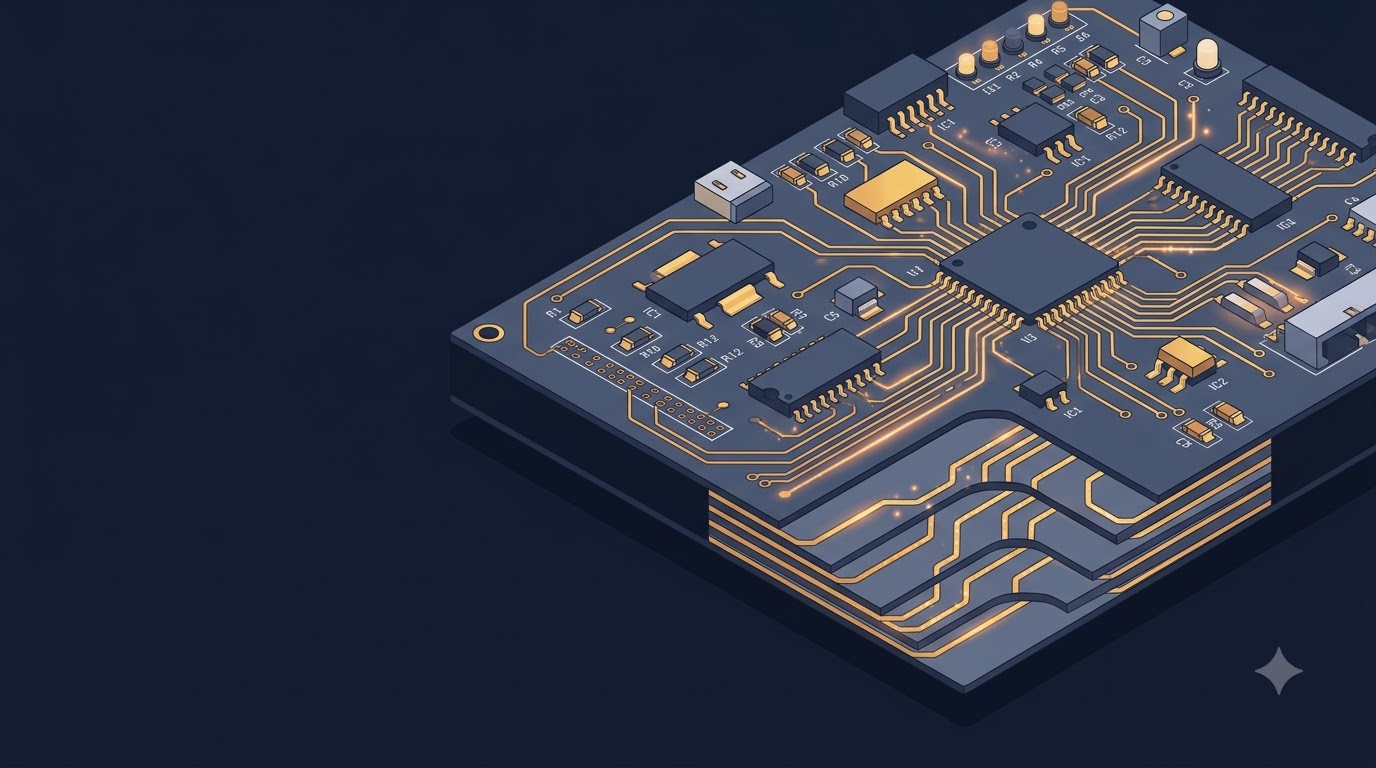
A circuit that works on a breadboard doesn't automatically translate into a PCB that works reliably in production. Trace routing, layer stack-up, thermal management, and component placement all affect whether a board actually performs the way it was designed to — which is where a lot of self-designed or rushed PCBs run into trouble after the prototype stage. We provide professional custom PCB design services covering the full path from schematic to a working, manufacturable board.
What Our PCB Design Service Covers
Schematic Design
Translating your circuit concept or requirements into a complete, correctly annotated schematic — component selection, signal flow, and power distribution planned before layout begins, not figured out mid-design.
PCB Layout & Routing
Careful trace routing and component placement accounting for signal integrity, EMI/EMC considerations, and thermal behavior — not just fitting components into available space. This is where a huge share of real-world board failures actually originate, and where experience matters most.
Multilayer & Complex Board Design
Single-layer and double-layer boards for simpler circuits, through to multilayer boards (4-layer, 6-layer, and beyond) for more complex designs requiring dedicated power/ground planes and controlled impedance routing.
Component Sourcing & BOM Management
Bill of materials preparation with attention to component availability and lifecycle status — designing around parts that are actually in stock and likely to remain available, rather than specifying components that create sourcing headaches during production.
Design for Manufacturing (DFM) & Design for Testing (DFT)
Checking your design against manufacturability constraints before fabrication — trace widths, via sizes, and clearances that a fabrication house can actually produce reliably — plus test point placement that makes post-assembly testing practical rather than an afterthought.
Gerber File Generation & Fabrication Support
Complete, fabrication-ready output files, along with support coordinating with your chosen PCB manufacturer (or ours) through the fabrication and assembly process.
Prototyping & Testing
Building and testing a working prototype before committing to a full production run — catching design issues at the prototype stage is dramatically cheaper than discovering them after a batch of boards has already been manufactured.
Types of Boards We Design
- Single & double-layer PCBs — for simpler circuits, sensors, and low-complexity embedded devices
- Multilayer PCBs — for more complex designs requiring dedicated power planes, controlled impedance, or higher component density
- Rigid-flex and flex PCBs — for applications with space constraints or where the board needs to conform to a non-flat enclosure
- Mixed-signal boards — designs combining analog and digital circuitry, where layout decisions directly affect noise immunity and signal integrity
Industries & Applications We Serve
- IoT and embedded devices — sensor nodes, connected device hardware, and control boards
- Industrial automation and signaling systems — including custom alarm and control circuits, similar to the dual-tone IC circuit work we've documented for railway gate hooter systems
- Consumer electronics prototypes — hardware startups and inventors needing a manufacturable board from a concept or breadboard prototype
- Academic and research projects — M.Tech and PhD scholars needing a properly designed PCB for a hardware-based research project or thesis component
Our Process
- Requirements and schematic review — understanding your circuit function, constraints (size, power, environment), and target production volume
- Schematic design — a complete, reviewed schematic before layout begins
- Layout and routing — component placement and trace routing accounting for signal integrity, thermal, and manufacturability
- DFM/DFT review — checked against fabrication constraints and testing practicality before files are finalized
- Prototype fabrication and testing — a working prototype built and tested before any production commitment
- Production handoff — fabrication-ready files and support coordinating your production run
Why This Matters More Than It Seems
A board that "mostly works" in testing but fails intermittently in the field is usually a layout or component-selection problem, not a fundamental circuit design flaw — and these issues are dramatically more expensive to fix after a production run than to catch during design review. Getting layout, thermal management, and DFM right the first time is the difference between a one-off prototype and a board that's actually ready for real-world or production use.
Get Started
Whether you have a finished schematic that needs a proper layout, a rough circuit concept that needs full design support, or an existing board that needs revision, tell us what you're working on.
Talk to us on WhatsApp or explore more at researchzones.com to discuss your PCB project.
Chat with our team directly on WhatsApp for a quick quote or free guidance.
Frequently Asked Questions
Do you design both simple and complex multilayer PCBs?
Yes — from single and double-layer boards for simpler circuits through to multilayer boards for more complex designs requiring dedicated power planes and controlled impedance routing.
Can you help if I only have a rough circuit idea, not a finished schematic?
Yes — schematic design is part of our service, so we can work from a circuit concept or requirement through to a complete, reviewed schematic before layout begins.
Do you handle prototyping, or only the design files?
Both — we build and test working prototypes before any production commitment, since catching design issues at the prototype stage is far cheaper than after a full production run.
What's the difference between a board that works on a breadboard and a properly designed PCB?
Trace routing, thermal management, signal integrity, and component placement all affect real-world reliability in ways a breadboard doesn't reveal — a board that "mostly works" in testing often has a layout issue that only shows up as intermittent failure in the field.
Can you help with component sourcing if some parts are hard to find?
Yes — BOM preparation includes attention to component availability and lifecycle status, designing around parts that are realistically sourceable rather than ones that create production delays later.
Do you support academic or research-based PCB projects?
Yes — we support M.Tech and PhD scholars needing a properly designed PCB for hardware-based research projects or thesis components, alongside our broader research and thesis support services.
Related Articles
0 Comments
Be the first to comment.