
RFID vs Traditional Key Locks: Which Is Actually Safer for Hotels?
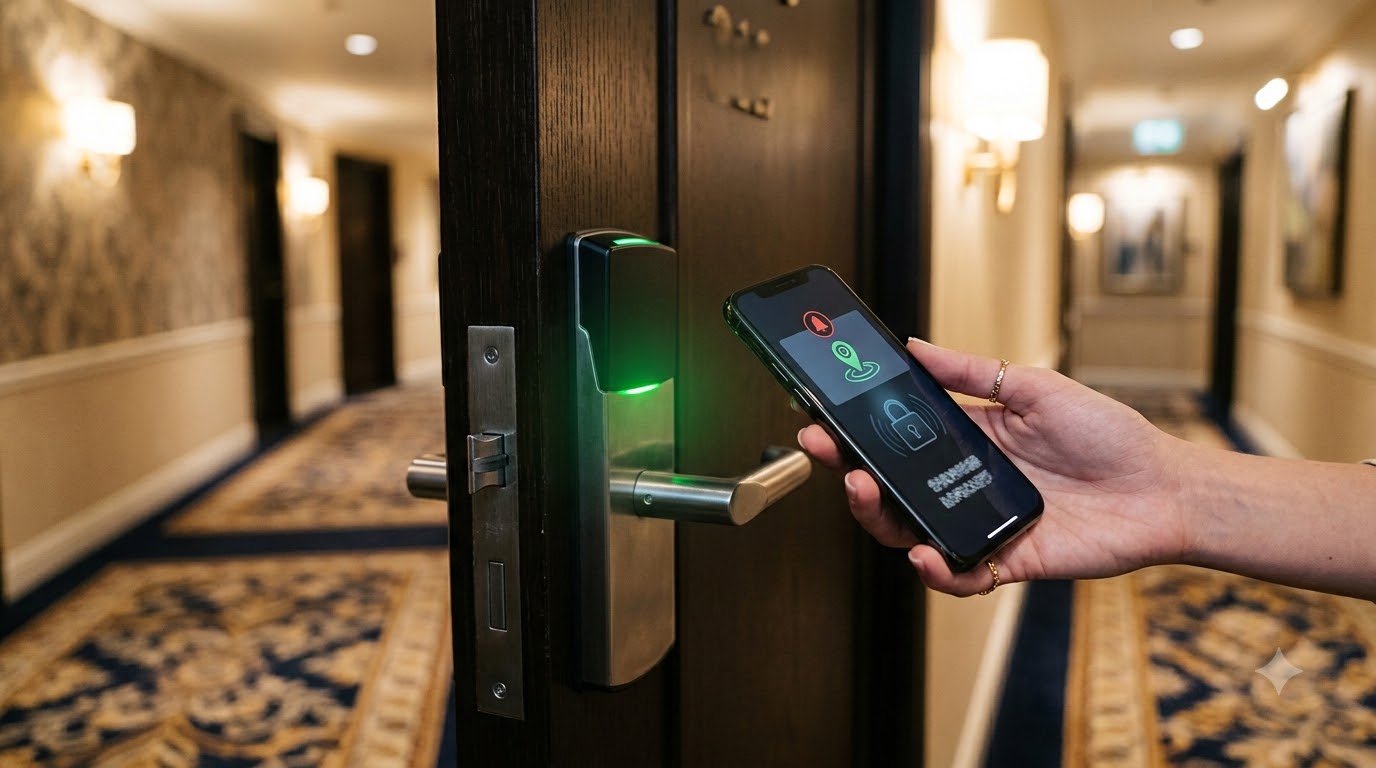
The assumption that RFID locks are automatically safer than traditional metal keys is only partly true — it depends heavily on what kind of "safe" you're evaluating for. Against a guest losing a key or an ex-guest trying to re-enter after checkout, RFID is a clear improvement. Against staff-level fraud — the kind we've covered in detail in our hotel fraud prevention guide — a poorly implemented RFID system can be no better than a traditional key, and in some ways easier to exploit.
Where RFID Locks Clearly Win
- Instant key deactivation — a lost or stolen RFID card can be deactivated immediately; a lost metal key means re-keying the entire lock
- No physical key duplication — traditional keys can be duplicated at any hardware store; RFID cards generally can't be copied without specialized (and traceable) equipment
- Per-guest access control — each stay gets a fresh card tied to specific dates, rather than a key that could theoretically still work if not returned
Where RFID Locks Don't Automatically Win
Staff-Level Fraud Risk
A traditional metal key system has one advantage that's easy to overlook: physical keys are a finite, countable resource. If a hotel has 20 rooms, there are (in theory) 20 keys to track. A standalone RFID system, by contrast, lets any staff member with encoder access generate an unlimited number of working keys — with no natural limit and, without PMS integration, no record of how many were made or why.
Audit Trail (Or Lack Of One)
A physical key system has essentially no audit trail either — but nobody assumes it does. The risk with RFID is that hotels often assume "digital" automatically means "logged and traceable," when a standalone system frequently isn't logging anything meaningful at all.
Override Access
Master keys exist in both systems, but a physical master key is a single, trackable object — you know exactly who has it. A digital override on an RFID system can sometimes be replicated or used without the same physical accountability, depending on the system's design.
The Real Comparison Isn't RFID vs. Traditional — It's Integrated vs. Standalone
The more useful question isn't "RFID or traditional key" — it's whether whatever system you use is connected to your booking and payment records, or operating independently of them. A traditional key system tied to a rigorous, disciplined manual sign-out log can, in theory, offer more accountability than a poorly implemented standalone RFID system with no integration at all. In practice, few hotels maintain that manual discipline consistently — which is exactly why PMS-integrated RFID, not RFID alone, is the meaningful upgrade.
What Actually Closes the Gap
- Card issuance tied directly to a confirmed, paid booking in the PMS
- Every card creation event logged with staff ID and timestamp
- Override/master access logged and flagged, not invisible
- Cloud-based CCTV backup that on-site staff can't delete
This is the specific integration we cover in detail in our PMS-integrated smart lock solution and our broader hotel PMS software services breakdown.
Bottom Line
RFID is the better foundation — but only once it's integrated with your booking system. An RFID lock bought purely for its app and keyless convenience, without asking about PMS integration, audit logging, and override tracking, isn't meaningfully safer than a traditional key system against the specific risk of staff-level fraud.
Talk to us on WhatsApp to assess your current lock system, or read our full RFID lock buyer's guide before purchasing new hardware.
Chat with our team directly on WhatsApp for a quick quote or free guidance.
Frequently Asked Questions
Is RFID always more secure than a traditional key?
Against lost keys and unauthorized re-entry after checkout, yes. Against staff-level fraud specifically, only if the RFID system is integrated with your booking/PMS system — a standalone RFID system can be equally or more exploitable than a well-managed traditional key system.
Can traditional key systems be made more secure without switching to RFID?
To some degree, with rigorous manual sign-out logging — but this requires consistent staff discipline that's hard to maintain long-term, which is exactly the kind of gap a properly integrated digital system closes structurally instead of relying on habit.
What's the single biggest security difference between the two systems?
Whether key/card issuance is tied to a verified booking record. This has nothing to do with whether the lock itself is digital or physical — it's about whether the issuance process is connected to your booking system at all.
If I already have RFID locks, do I need new hardware to fix this?
Usually not — most compatible RFID hardware can be integrated with a PMS through a backend and controller upgrade rather than requiring full replacement.
Related Articles
0 Comments
Be the first to comment.