
Add AI Detection to Your Existing CCTV — No New Cameras or Wiring Needed
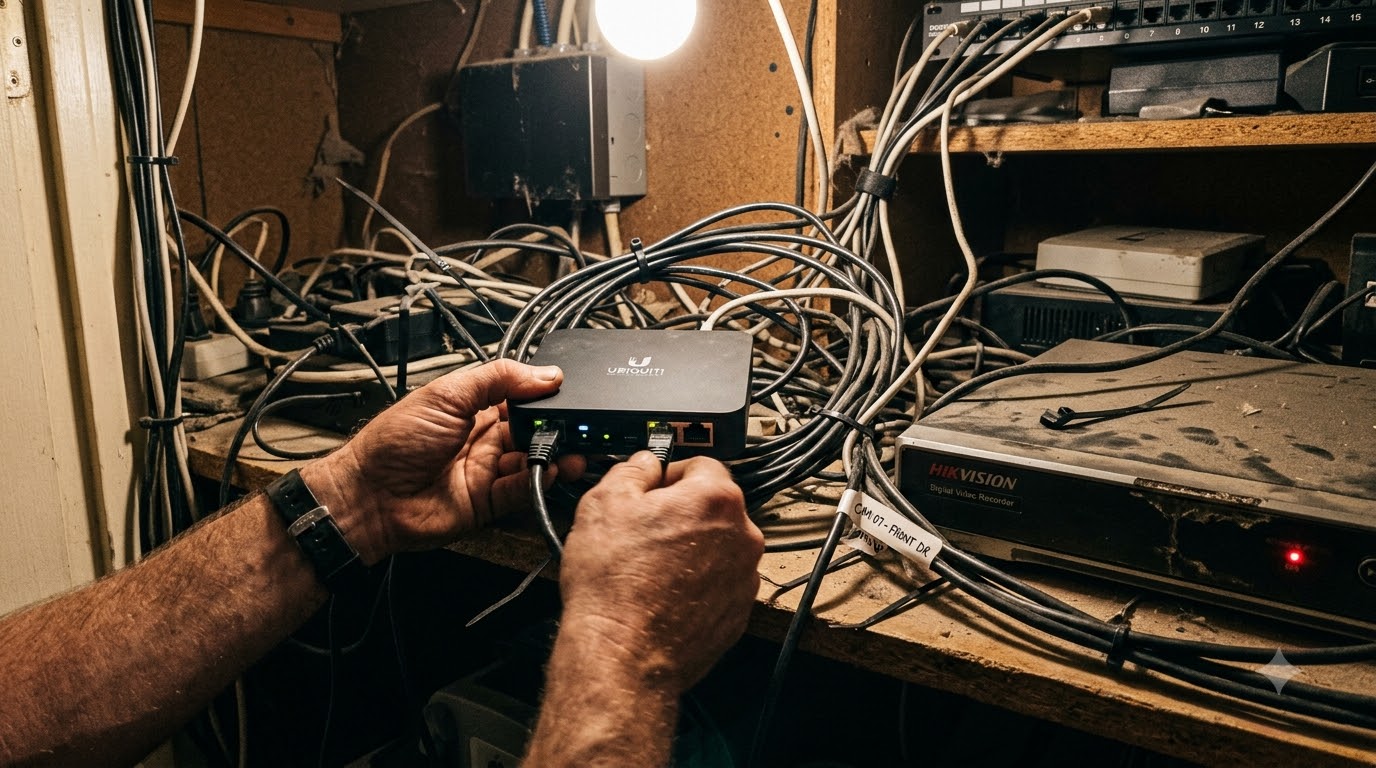
The most common reason businesses delay upgrading to AI-powered camera detection isn't cost — it's the assumption that it means ripping out an existing, working camera system and starting over. In most cases, that assumption is wrong. AI detection can be added as an intelligent analysis layer on top of your existing cameras and DVR, without new cameras, without new wiring, and without the installation disruption a full system replacement would involve.
How This Actually Works
Your existing cameras are already capturing a video feed — that feed is the raw material AI detection needs. Rather than replacing your cameras, the AI system connects to your existing DVR/NVR output and processes that same feed through a detection model, watching for whatever you've configured it to look for (people, specific objects, fire/smoke, vehicles, and more). The cameras keep doing exactly what they were doing; the AI layer adds intelligence on top of the feed that already exists.
What You Typically Don't Need
- New cameras — if your existing cameras produce a usable video feed, they can generally stay exactly where they are
- New wiring or cabling runs — the AI processing connects to your existing DVR/NVR infrastructure rather than requiring a parallel cabling installation
- Cloud-only setups if you don't want them — many implementations can run detection on local hardware connected to your existing system, keeping footage and processing on-site if that's a requirement
What Determines Compatibility
- Video feed accessibility — your existing DVR/NVR needs to support an accessible output stream the AI system can process; most modern systems do, but very old or proprietary-locked systems occasionally need an adapter step
- Camera resolution and placement — detection accuracy depends on the camera actually having a clear enough view of what you want detected; a camera positioned for general area coverage may need repositioning (not replacement) for reliable object-specific detection
- Processing hardware — depending on how many camera feeds and what kind of detection you need, a local processing unit may be added to run the AI models — this is a much smaller and simpler addition than a camera system overhaul
A Realistic Assessment Process
- Review your current camera and DVR setup — checking feed accessibility, camera placement, and existing hardware specifications
- Identify what detection you actually need — fire/smoke, specific person or object recognition, vehicle detection, or a combination, since this affects camera placement requirements
- Confirm compatibility and any gaps — most setups are compatible as-is; occasionally a specific camera needs repositioning or a feed adapter is needed for an older system
- Deploy the AI detection layer — connected to your existing infrastructure, with alerts configured for what you actually want to know about
When You Might Need Additional Hardware
To be transparent: if your existing cameras are very low resolution, positioned in a way that can't capture what you need detected, or your DVR genuinely can't produce an accessible feed, some additional hardware may be needed. This is the exception rather than the rule for most modern CCTV setups, and even then it's typically an addition (a repositioned or added camera, a feed adapter) rather than a full system replacement.
Get Started
Tell us about your current camera system — brand, DVR/NVR type, and roughly how old the setup is — and we'll assess what's realistically achievable without new installation work.
Talk to us on WhatsApp or explore our custom object and person detection and fire and smoke detection services.
Chat with our team directly on WhatsApp for a quick quote or free guidance.
Frequently Asked Questions
Will this work with any CCTV brand?
Most modern DVR/NVR systems with an accessible video output are compatible. Very old or heavily proprietary-locked systems occasionally need an adapter step, which we assess during the initial review.
Do I need internet/cloud connectivity for this to work?
Not necessarily — many implementations can run detection on local hardware connected to your existing system, keeping processing and footage on-site if that's your requirement.
How long does setup take if no new wiring is needed?
Significantly faster than a full camera system installation — typically a matter of days rather than weeks, since the work is primarily configuration and calibration rather than physical installation.
What if my cameras are positioned for general coverage, not specific detection?
Detection accuracy depends on camera placement having a clear view of what you want detected — this occasionally means repositioning an existing camera, which is a minor adjustment, not a new installation.
Can I add more detection types later without reinstalling everything?
Yes — additional detection types (adding weapon detection to an existing person-detection setup, for example) are generally a configuration addition to the existing system, not a new installation.
Related Articles
0 Comments
Be the first to comment.